

Introduction
Starting your journey without a clear Digital Marketing Plan Example for Beginners can feel confusing and overwhelming. You see different strategies, tools, and platforms everywhere, but no one clearly tells you where to begin or what to focus on first.
The truth is, without a proper structure, even your best efforts can fail. That is why understanding a Digital Marketing Plan Example for Beginners is so important. It gives you a clear direction so you do not waste time, money, or effort on things that do not work.
In this guide, you will learn a simple and practical Digital Marketing Plan Example for Beginners that you can apply immediately. You will understand how to build a strategy, choose the right channels, and grow step by step.
What You Will Learn in This Guide
In this Digital Marketing Plan Example for Beginners, you will learn 7 powerful steps that help you build a strong and result-driven strategy from scratch. This guide is designed to simplify your journey and give you clarity at every stage.
Why Most Beginners Struggle Without a Plan
Many beginners enter digital marketing with excitement but quickly lose direction. They try multiple platforms, create random content, and sometimes even spend money on ads without seeing results.
The real issue is not effort but lack of structure. Without a proper Digital Marketing Plan Example for Beginners, your actions become scattered and inconsistent.
A clear plan helps you focus only on what matters. It aligns your efforts with your goals and gives you a roadmap to follow.
Building the Foundation Before You Start
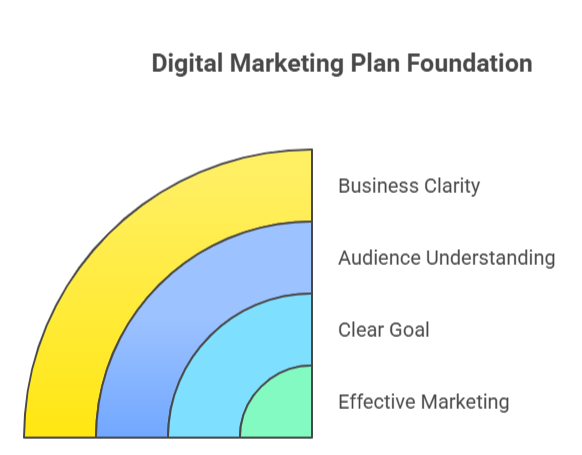
Before creating your Digital Marketing Plan Example for Beginners, you need clarity about your business and audience.
You should understand what you are offering, who your ideal customer is, and what problem you are solving. Without this foundation, your marketing will not perform effectively.
Having a clear goal is equally important. Whether it is increasing traffic, generating leads, or improving sales, your plan should be built around a specific objective.
7 Powerful Steps to Create a Digital Marketing Plan
Understanding your current situation and analyzing your business performance
Identifying your target audience and their needs
Setting clear and measurable marketing goals
Choosing the right digital marketing channels
Creating a consistent content strategy
Using the right tools to improve efficiency
Tracking results and optimizing performance
These steps form the backbone of any successful Digital Marketing Plan Example for Beginners and help you build a scalable system.
A Practical Digital Marketing Plan Example for Beginners
Let’s understand this with a real example.
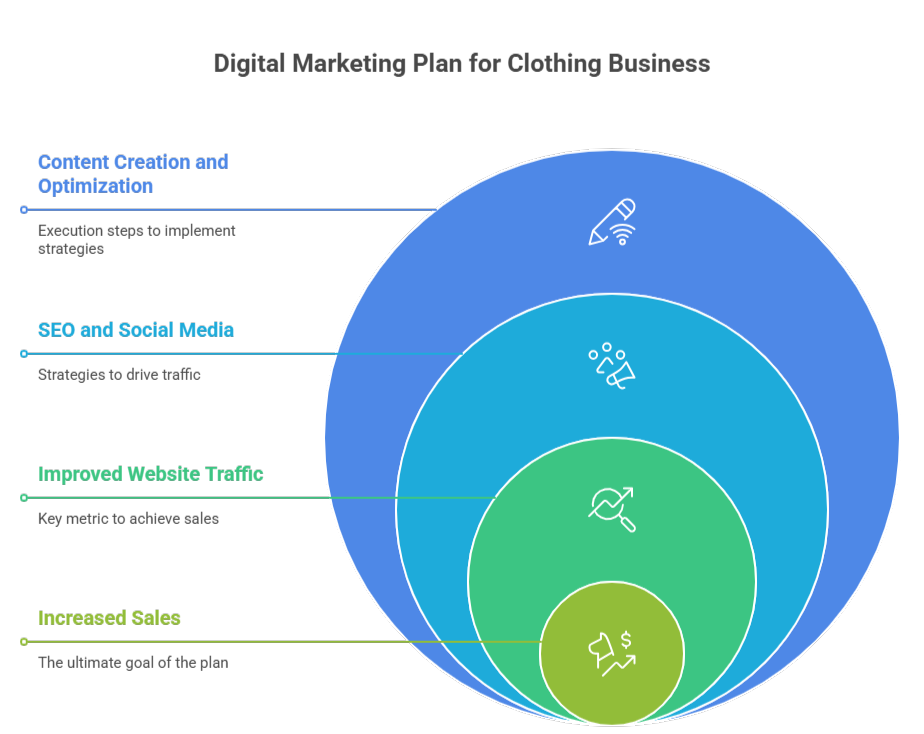
Imagine you run a clothing business and want to grow online. Your goal is to increase website traffic and generate more sales within three months.
Your objective is to improve traffic by a fixed percentage. This makes your goal clear and measurable.
The opportunity is that many users are searching online for fashion products, but your competitors are not fully optimized. This creates space for you to grow.
Your strategy should focus on SEO and social media. SEO helps you get long-term traffic, and social media helps you build trust and engagement.
Your execution should be simple. Focus on content creation, audience interaction, and regular optimization. This is how a Digital Marketing Plan Example for Beginners works in real situations.
Choosing the Right Channels Without Overcomplicating
One of the biggest mistakes beginners make is trying to use every platform.
A smart Digital Marketing Plan Example for Beginners focuses only on a few effective channels. SEO is one of the best starting points because it builds long-term traffic.
Learn more about SEO here: https://moz.com/beginners-guide-to-seo
Social media platforms like Instagram help you connect with your audience and build trust. Content marketing connects everything and drives results.
Keeping your approach simple always gives better outcomes.
Content Strategy That Drives Results
Content is the core of any Digital Marketing Plan Example for Beginners. Without content, there is no visibility or engagement.
You should focus on creating content that solves real problems. This builds trust and positions you as an authority.
A simple approach works best. Create short content regularly and long-form content weekly. Over time, this builds consistency and growth.
You can also use tools like Mailchimp to manage your audience and improve engagement.
https://mailchimp.com
Tools That Support Your Growth
Using the right tools makes executing a Digital Marketing Plan Example for Beginners much easier.
Google Analytics helps you track website performance and understand user behavior.
https://analytics.google.com
Google Search Console helps you monitor SEO performance and improve visibility.
https://search.google.com/search-console
Ubersuggest helps you find keywords and content ideas.
https://neilpatel.com/ubersuggest
These tools help you make better decisions based on real data.
Mistakes You Should Avoid as a Beginner
Many beginners slow down their growth by making common mistakes.
They focus on quick results instead of long-term strategy. They are inconsistent with content. They ignore SEO or rely only on social media.
Another mistake is copying others without understanding their strategy.
A proper Digital Marketing Plan Example for Beginners helps you avoid these issues and stay focused.
Aligning Strategy with Business Goals
Your marketing plan should always support your business goals.
If your goal is sales, your strategy should focus on conversions. If your goal is awareness, your strategy should focus on reach.
A strong Digital Marketing Plan Example for Beginners ensures that every action contributes to your overall objective.
Final Thoughts

Creating your first Digital Marketing Plan Example for Beginners does not have to be complicated.
Start simple, stay consistent, and keep improving your approach. Over time, your results will grow.
This Digital Marketing Plan Example for Beginners is designed to help you take action and build a real system that works.